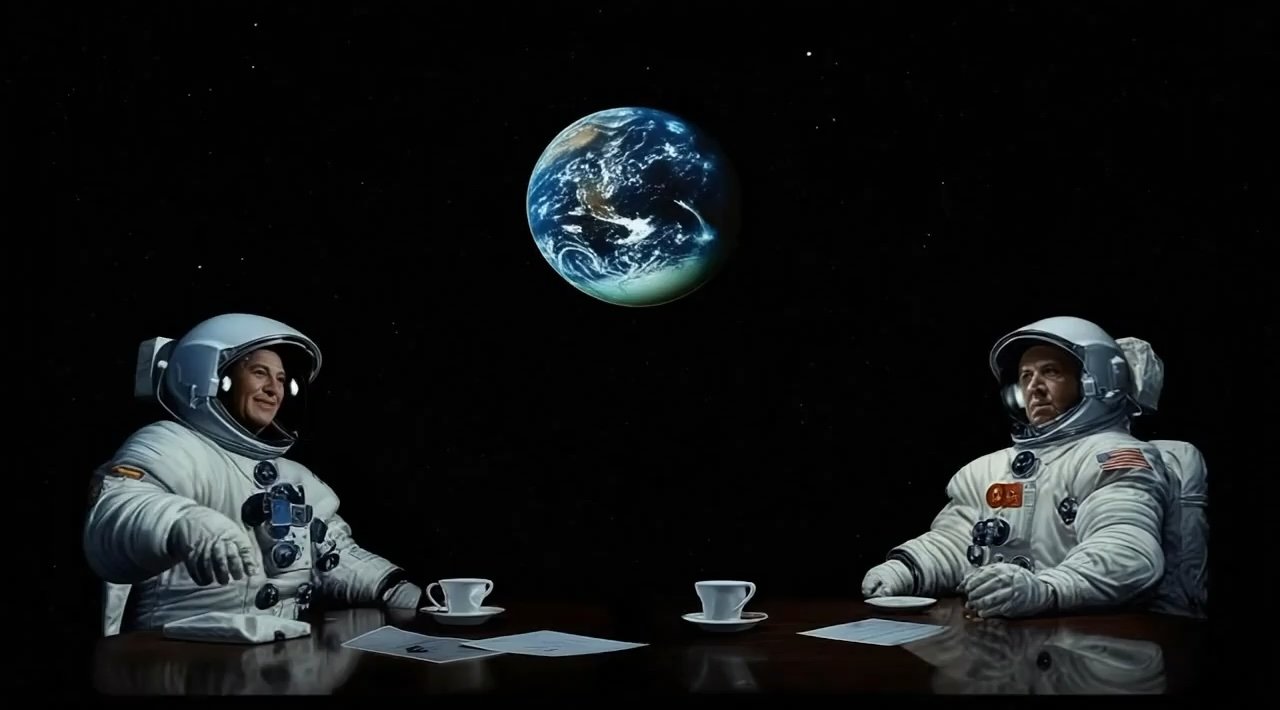
Always Has Been
Chapter I: Fenestra Animae
The vast majority of human knowledge now exists online. What we like and dislike is captured and transmitted through social networks, while our financial interests and assets are increasingly moving toward blockchain tokenization.
The internet has driven the mass digitization of nearly everything we do—and everything we have done—culminating in the aggregation and compression of humanity into the latent space of artificial intelligence.
Yet as revolutionary as this technology is, human nature itself has not changed. Despite these advancements, we are no different as a species than we were centuries ago. This creates a paradox: although the world has transformed dramatically, there remains a nagging feeling that everything unfolding today has already happened or “always has been”.
This artwork is a commentary on the constancy of human nature. It uses the same digital technologies that have reshaped our world—from websites to social media to crypto to AI—and blends them together to form an aesthetic lens through which to gaze upon forgotten pasts and dreams of futures to come.
The Artwork
Drawing upon major technological shifts since the advent of the internet—from the dot-com boom to the current AI frenzy—the work uses a bespoke composite of digital mediums through which a series of alternate realities emerge. It is mixed-media, but of the post-internet age.
Images, videos, and text are generated in real time using artificial intelligence. The audience engages with the work through an interactive website, with access granted through social media participation. Ownership and authorship are established through non-fungible tokens, positioning the artwork within both cultural and financial systems that increasingly shape contemporary life.
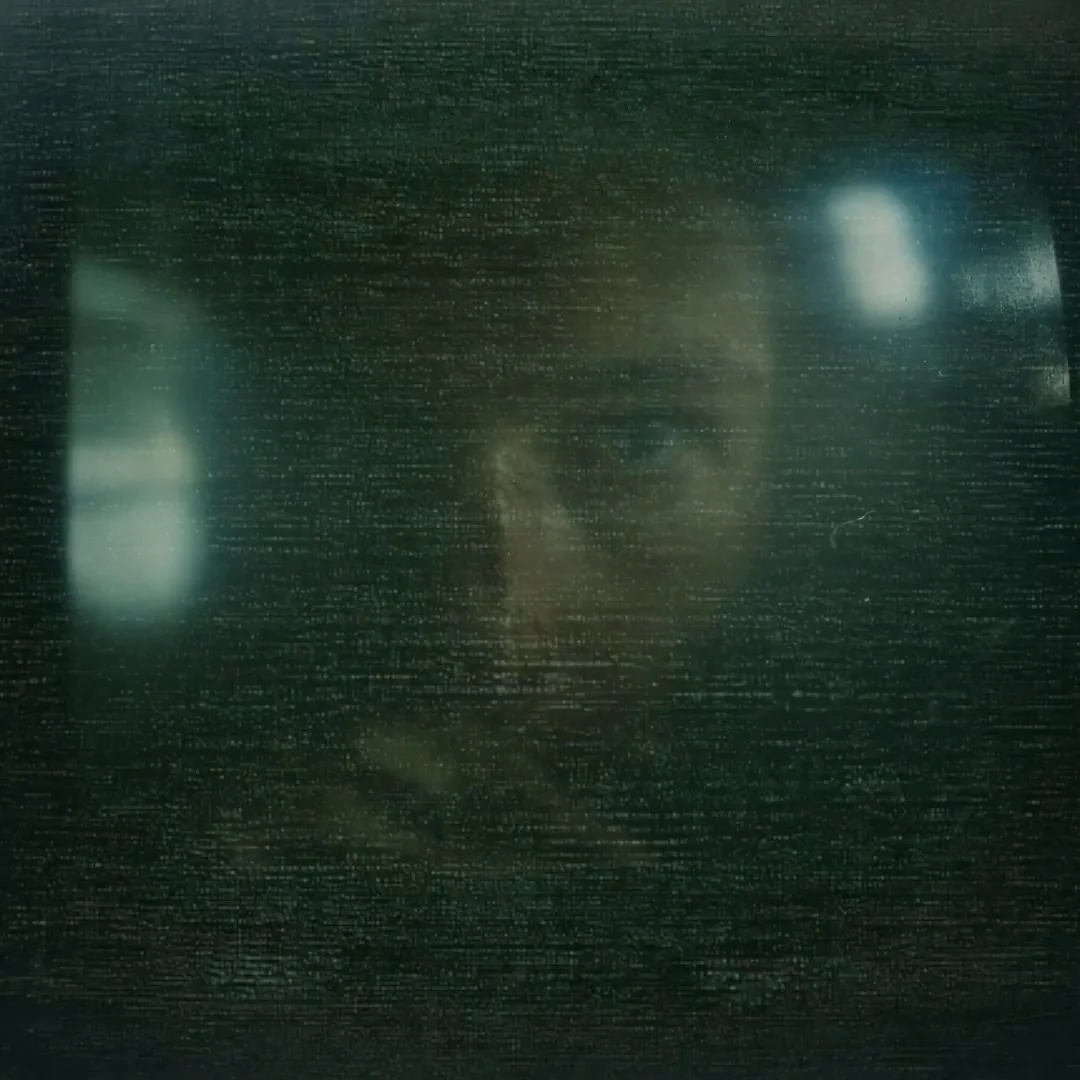
The work ultimately resolves in a materially grounded form: a physical sculpture that functions as a metaphorical window into the digital realm. Through it, the viewer encounters a mediated reflection of our collective selves—filtered, reconstructed, and rendered through the perceptual lens of artificial intelligence.
The Simulation
Mid-February 2026
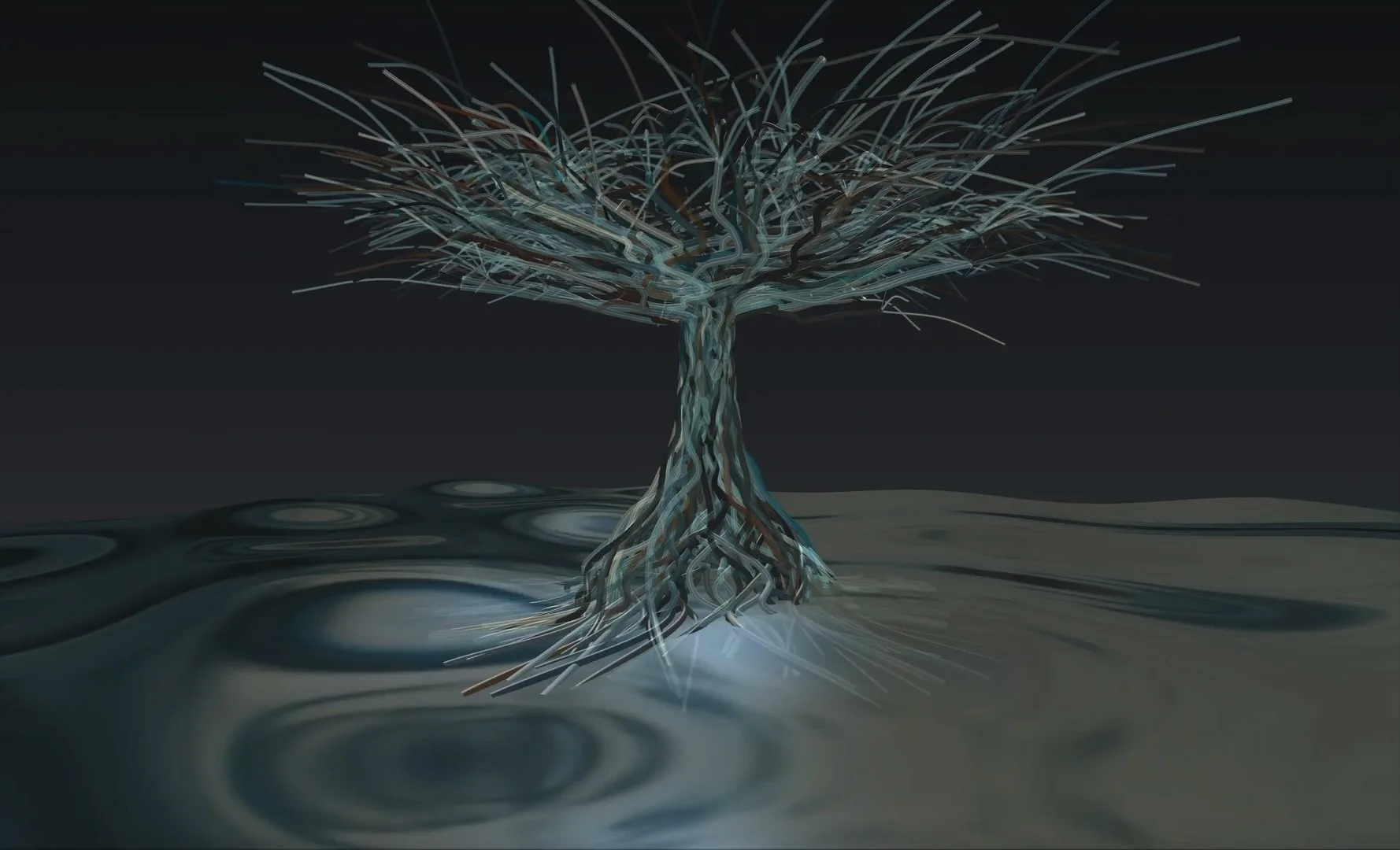
The Simulation is a custom generative AI framework that produces the artwork in real time as people engage with it. It is structured hierarchically: the simulation is composed of realities; each reality contains historical events; and each event is made up of individual moments. These events are drawn from the past 400 years, beginning with the invention of the stock market, and focus on moments that significantly shaped financial systems. Markets are used as the historical throughline because they are inherently cyclical—defined by repeating patterns of speculation, collapse, recovery, and belief—mirroring the work’s central premise that, despite technological change, human behavior remains largely constant.
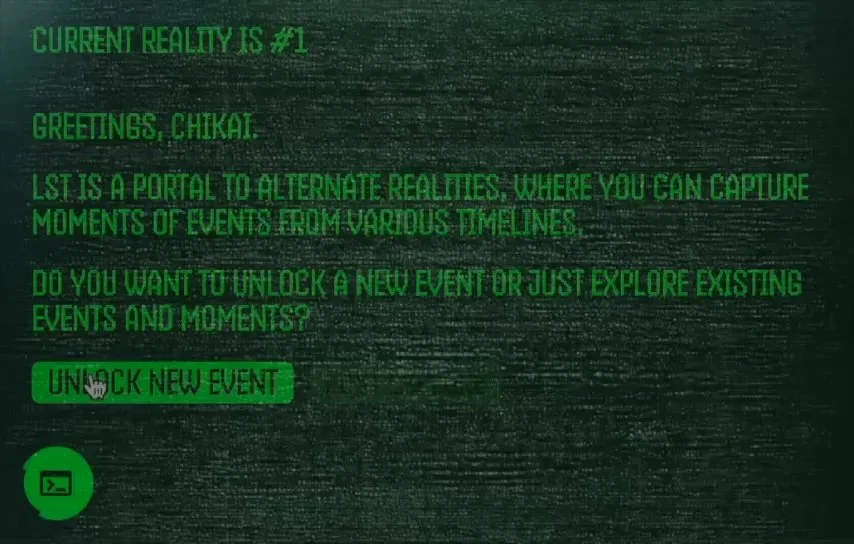
The Terminal is an internet portal through which participants access and interact with The Simulation. It is where new realities are released, where events within those realities are unlocked, and where moments are captured. It also tracks participation through a public leaderboard that reflects user activity and engagement.
The Terminal itself is an interactive 3D website that incorporates multiple forms of internet media and contemporary technology. Participants unlock events by conversing with a large language model that poses questions and responds to both user input and real-time crypto market data, using current market conditions as a proxy for collective sentiment. Events are generated using AI video systems, while moments are generated as AI-created images.
Access to The Terminal is mediated through social media. If the @lstfyi account on X engages with a user’s post, that user is granted entry. Activity on The Terminal contributes to a user’s standing on the leaderboard. The leaderboard is designed to reward not only financial participation, but also cultural participation.
All data generated within The Terminal constitutes the artwork itself. This data ultimately manifests in two forms: a digital NFT collection and a physical sculptural work.
The Terminal was initially released in an alpha version under the name Latent Space Terminal. All data created during this alpha phase remains part of the final artwork. The full version of The Terminal will be released in mid-February alongside the introduction of new realities.
The COLLECTION
(Late-February 2026)
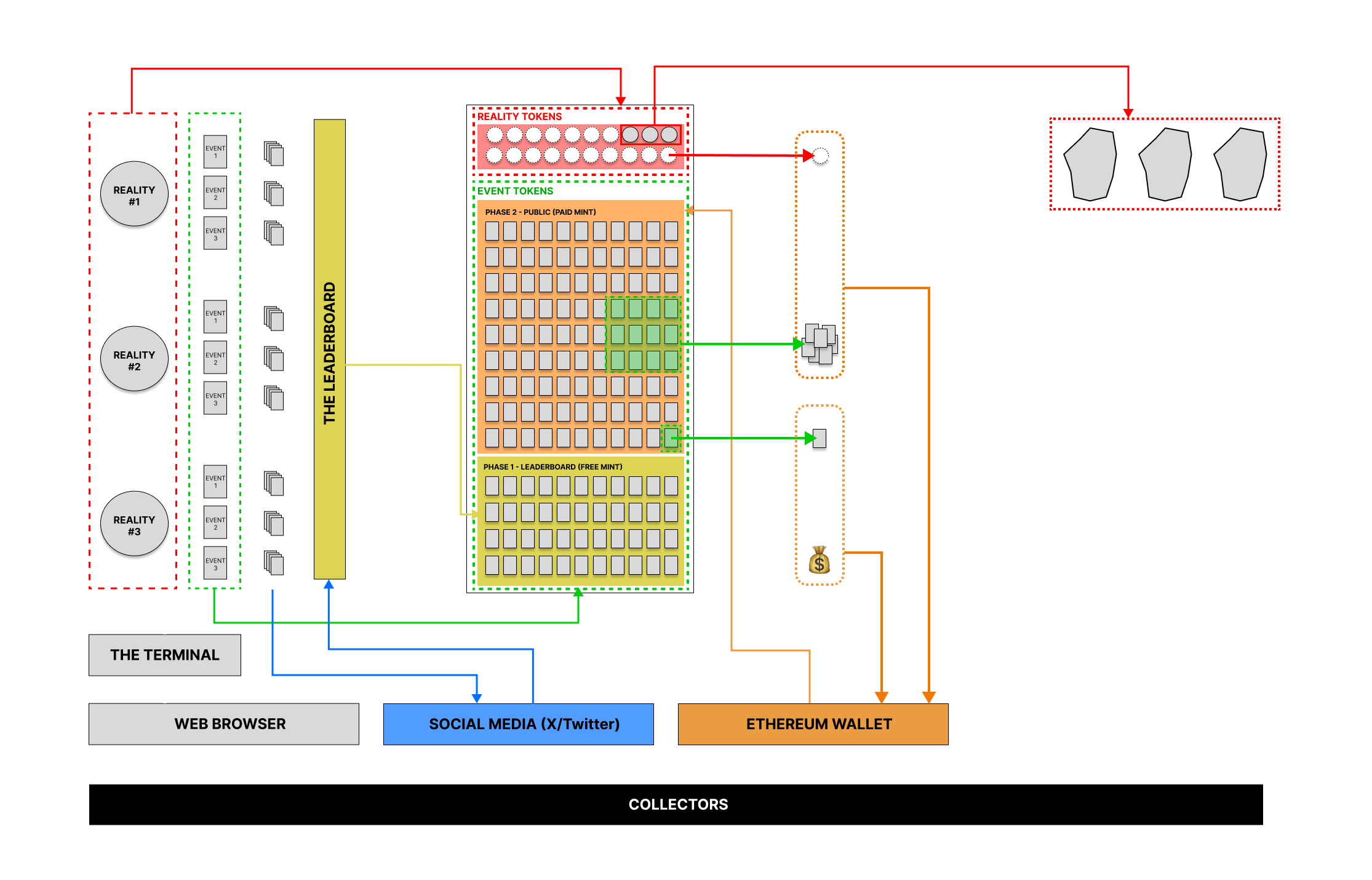
The digital form of the artwork will be released in late-February as a blind mint of all the events from realities within The Simulation. This release occurs after all realities have been introduced and The Terminal has closed, allowing the system to be experienced in full before it is collected. The distribution of the digital collection occurs in two phases. The first phase is a free mint for top participants ranked on the leaderboard and the second phase is a paid mint open to the public. Half the proceeds of the mint will go to the artist and the other half will go into a treasury.
Reality tokens, which represent the highest level of the digital hierarchy, will be minted but initially held within the treasury. Three reality tokens will be reserved to be paired with three physical sculptures. These tokens will be transferred to the collectors who acquire the sculptures. Only three physical sculptures are guaranteed to exist. However, additional sculptures may be unlocked in the future. To do so, a collector must first obtain a reality token, at which point they become eligible to commission and purchase a physical sculpture created on demand by the artist.
The Redemption
(Early-March 2026)
In early March, the redemption window opens, marking the point at which participation within the system can be converted into either long-term ownership or immediate value. Redemption introduces a choice: to consolidate participation into a higher-level artifact (i.e. a reality token) or to extract liquidity from the system.
Collectors who have accumulated the greatest number of event tokens from a specific reality are eligible to redeem them for the corresponding reality token. This process uses a burn-to-redeem mechanism: event tokens from that reality must be destroyed in order to claim its reality token. Burning event tokens permanently removes them from circulation, increasing the scarcity of the remaining event tokens.
At the same time, collectors may choose to burn an individual event token in exchange for a share of the treasury. Each event token may be redeemed for 1% of the treasury at the moment of redemption. Once an event is redeemed in this way, the redeemable percentage immediately resets to 0% and then gradually increases back to 1%. The rate at which this percentage increases is determined by Ethereum’s block creation rate, using the passage of time as the regulating mechanism.
As mentioned before, the treasury is funded by half of the proceeds from the event token mint, but they are also funded by half of the royalties generated through secondary trading of the event tokens from the free-to-claim mint, which carry a 5% royalty fee. And three reality tokens are reserved for pairing with physical works, which are introduced in the final stage of the project.
The Relic
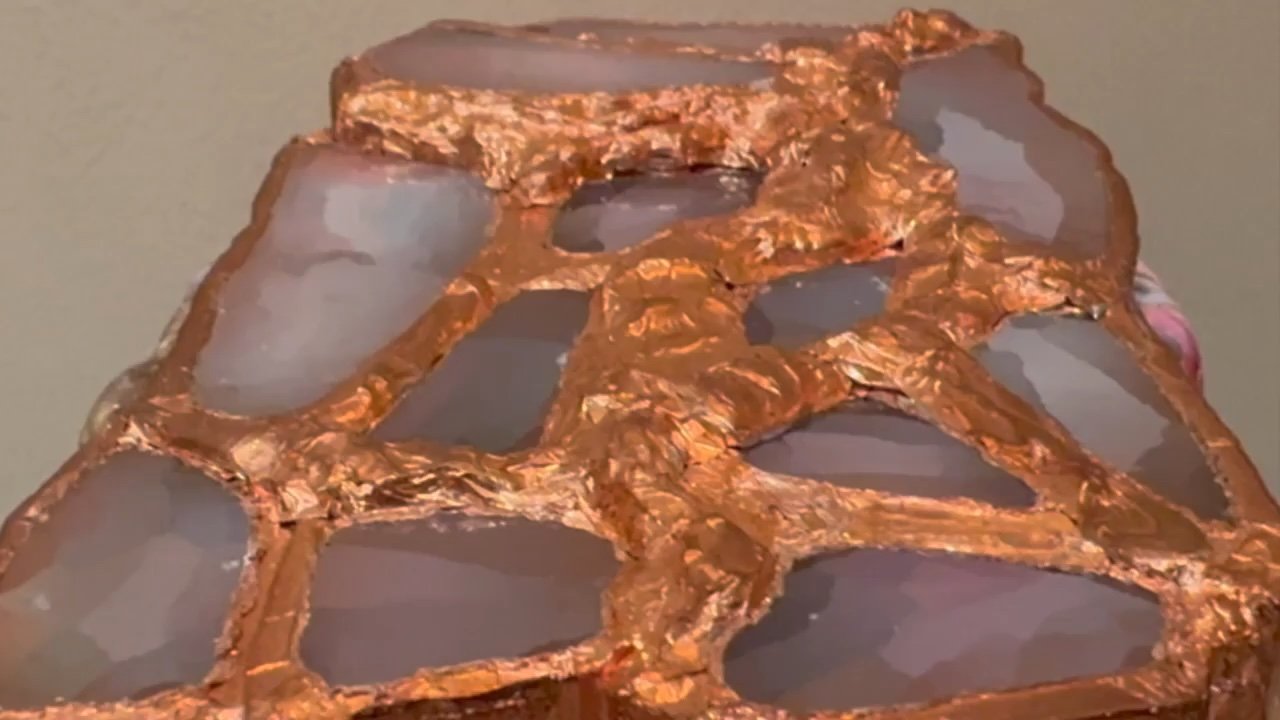
Early prototype of “The Relic”
(Summer 2026)
The final stage of the project is The Relics, the physical manifestation of the artwork. Released in the summer of 2026, The Relics translate the accumulated digital history of the system into a materially grounded form.
Three physical sculptures are guaranteed to exist. Each is paired with a corresponding reality token, which is transferred to the collector at the time of purchase. Ownership of the sculpture bestows ownership of its reality token. The two exist as parallel expressions of the same underlying reality—each operating within its own domain.
Each physical sculpture will contain an embedded NFC chip with a secure element. By tapping the sculpture with a compatible device, the owner can cryptographically sign a transaction that transfers the associated reality token to a designated wallet. This allows the digital token to be transferred directly through interaction with the physical object itself, ensuring that possession and provenance remain aligned while preserving the distinction between the physical and digital forms.
Additional physical sculptures may be created in the future, but only through digital ownership. A collector who holds a reality token becomes eligible to commission and purchase a physical sculpture, which is then created on demand by the artist. There can only be one physical sculpture for each reality token, so once the sculpture is purchased, no more can be redeemed for that reality token. This structure introduces a countervailing dynamic between reality tokens and physical sculptures. Because the creation of a physical work requires the redemption of a reality token, the total number of physical sculptures that can exist is determined by how those tokens are used. A collector who acquires reality tokens may choose never to redeem them, effectively constraining the number of physical sculptures that enter the world. In this way, scarcity is not fixed in advance but emerges from individual decisions, making the absence of objects as meaningful as their creation.